Smart Lock for Renters: A Practical Guide to Access and Privacy
A practical smart lock for renters guide covering landlord approval, installation, temporary access, privacy, battery recovery, tenant turnover, and responsible operation.
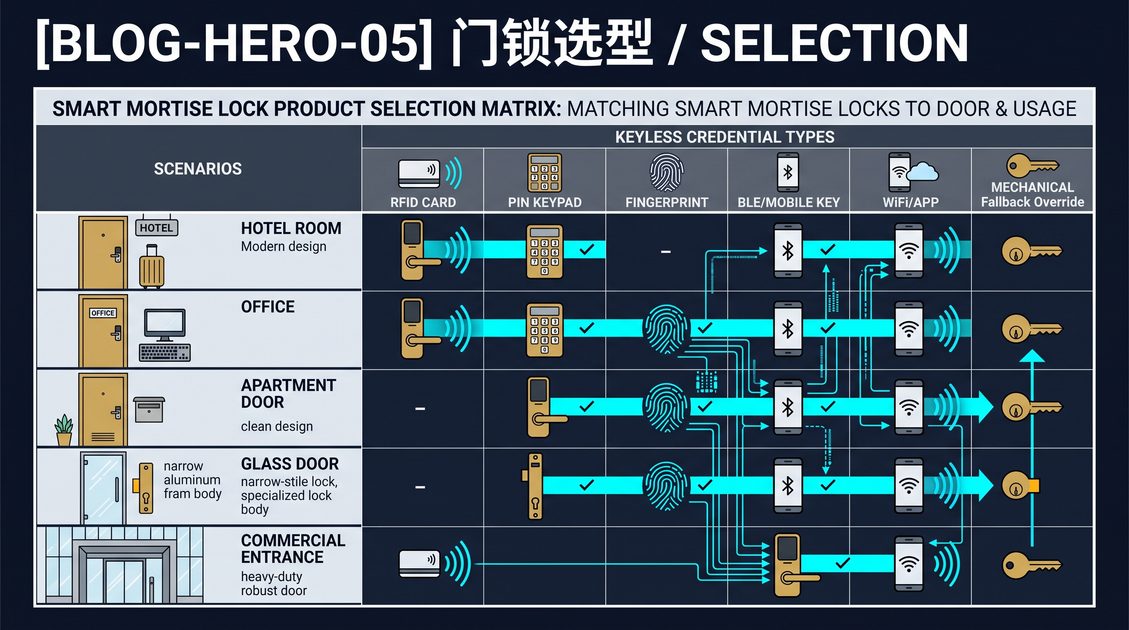
A smart lock for renters is an electronic access device selected for a tenant’s door with permission from the property owner and with a clear plan for installation, privacy, recovery, and removal at move-out. The best renter solution is not simply the lock with the most features: it must fit the existing door without unauthorized modification, preserve emergency egress, support temporary access, and leave the property in its agreed condition. This smart lock for renters guide explains how tenants and landlords can evaluate a reversible upgrade, manage credentials responsibly, and avoid the common problems caused by unclear ownership or a dead battery.
Smart Lock for Renters Guide: Get Permission First
A renter should obtain written approval before replacing, covering, or drilling any lock. The agreement should state who owns the hardware, who pays for installation and maintenance, whether the landlord or building manager receives an administrator credential, and what happens when the tenancy ends. In a multifamily building, the apartment door may be part of a fire-rated or master-keyed system, so an apparently simple replacement can affect building operations.
Ask whether the door uses a mortise body, cylindrical deadbolt, multipoint mechanism, or a specialty frame. Measure the opening only with permission, and use the manufacturer’s exact fit information rather than assuming a universal retrofit. A reversible installation that reuses existing holes is often preferable, but it still needs approval and professional review where life-safety or accessibility requirements apply.
Smart Lock for Renters Guide: Choose Access Methods
Renters should select credentials that match daily users. A keypad lets household members enter without a phone and makes temporary guest codes easy to issue. Bluetooth or mobile access is convenient when everyone carries a charged phone, while a card or fob can be practical for shared buildings. Fingerprint access is convenient for frequent users but needs a fallback because fingers can be wet, dry, injured, or unrecognized.
Use individual credentials when accountability matters. A landlord may need a service code, but the tenant should know when it is used and how it is revoked. Guest codes should have an expiry time, and a departing roommate’s credential should be removed promptly. Avoid posting an active code near the door or sharing an administrator account with visitors.
Smart Lock for Renters Guide: Battery and Recovery
A renter should understand what happens when the battery, phone, network, or app fails. Choose a lock with visible low-battery warnings and an emergency path, such as a mechanical key, keypad, card, or backup power terminal. Keep the recovery method accessible without defeating the property’s security policy, and document who should be called if the lock does not respond.
Networked features can be useful for remote guest access, but they should not be the only way to enter. Confirm what works offline and whether the lock stores a local authorization. The tenant and property manager should agree who receives battery alerts and who is allowed to change configuration.
Smart Lock for Renters Guide: Privacy and Move-Out
Electronic access creates records, so the tenant should ask what events are logged, where data is stored, who can view it, and how long it is retained. A property manager should limit access to necessary staff and avoid collecting more information than the operation requires. If biometric data is involved, request a clear explanation of local storage, encryption, deletion, and consent.
At move-out, remove tenant credentials, transfer or delete the tenant account, return any mechanical keys, and restore the door according to the written agreement. If the lock belongs to the tenant, remove it carefully and reinstall the original hardware or an approved replacement. Keep a handover record so the next tenant is not given access to an old credential.
Smart Lock for Renters Guide: Practical Checklist
Before purchase, confirm written approval, door compatibility, reversible installation, emergency egress, credential ownership, battery alerts, offline behavior, privacy controls, and the move-out process. A small pilot on one approved door can reveal fit and user-interface problems before a wider property decision. This smart lock for renters guide is general information; confirm local fire, building, accessibility, privacy, and electrical requirements with qualified professionals.
Not sure which sensor fits your project?
Talk to our mmWave application engineers for a free consultation.
Specify your hotel project with our engineers
Send your room count, ceiling type, and protocol preference. We will return a sample plan and quote within 24 business hours.
- Move from general guidance into a product or application discussion.
- Use RFQ when pricing, drawings, MOQ, or launch timing needs structure.
- Keep a direct contact path visible for fast clarifications and handoff.